
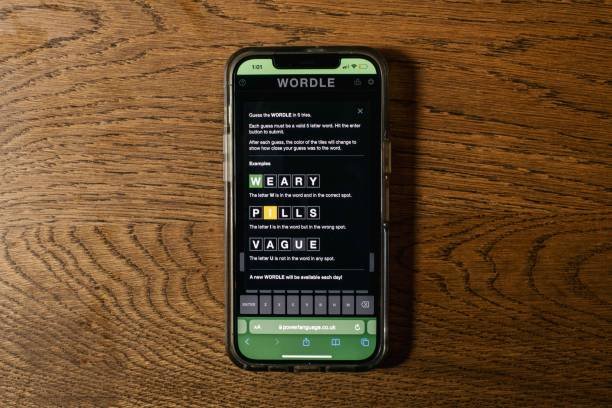
It’s a simple daily word game, yet Wordle has captured the hearts and minds of millions. Every day, players from around the globe attempt to solve the same five-letter puzzle in six tries or fewer. Whether you’re a seasoned veteran looking to maintain your streak or a newcomer just getting started, sometimes the answer can be elusive.
If you’re looking for a little help with the Wordle today, you’ve come to the right place. This guide will provide hints to nudge you in the right direction, reveal today’s Wordle answer, and offer strategies to sharpen your skills for future puzzles. Let’s get started on solving the daily word game for September 17, 2025.
Today’s Wordle Answer for September 17, 2025
Stumped on today’s puzzle? Don’t worry, it happens to the best of us.
The Wordle answer for Wednesday, September 17, 2025, is:
TEETH
A Closer Look at “TEETH”
Today’s Wordle answer, TEETH, is the plural form of “tooth.” These hard, bonelike structures rooted in the jaws are essential for biting and chewing food. Beyond their primary function in digestion, teeth also play a significant role in speech and facial structure.
The word “teeth” traces its origins back to the Old English tēþ, which was the plural of tōþ (“tooth”). This word, in turn, comes from the Proto-Germanic tanþs. Its ancient roots can be found in the Proto-Indo-European word h₃dónts, meaning “tooth.” This shared ancestry connects “teeth” to words in many other languages, such as the German Zähne, the Dutch tanden, and the Latin root dent-, which we see in modern English words like “dentist” and “dental.”
Hints for Today’s Wordle
Before you give up on your streak, here are a few clues that might help you solve the Wordle puzzle for September 17:
- Starting Letter: The word begins with the letter T.
- Vowels: The word contains two vowels, but they are the same letter repeated.
- Repeated Letters: There are two different letters that appear twice in the word.
- Meaning: The word refers to a body part used for chewing.
- A Good Starting Word: If you use the word “ETHER,” four of the five letters will turn yellow.
Master the Game: Wordle Strategies for Every Player
Whether you’re aiming for a personal best or competing against friends, having a solid strategy can make all the difference. Here are some proven tips to improve your Wordle game.
Choose Your Starter Word Wisely
Your first guess is the most important one, as it sets the foundation for the rest of your puzzle. The best starting words are those that contain common letters, particularly vowels. Words like “ADIEU,” “AUDIO,” or “OUIJA” are popular because they test multiple vowels at once.
Alternatively, you can focus on common consonants. Words like “SLATE,” “CRANE,” or “TRACE” include frequently used letters like S, L, T, R, and N. The New York Times Wordle Bot often favors “SLATE” as its opening guess. Experiment with a few and find one that works best for you.
Follow a Two-Word Strategy
Some advanced players use a two-word strategy to gather as much information as possible in their first two guesses. This involves using two words that have ten unique letters combined, covering all the vowels and some common consonants. For example:
- ADIEU and STORY
- CRANE and TOILS
- ROAST and GUIDE
This approach can quickly narrow down the possible letters, giving you a strong advantage for your third guess.
Pay Attention to Letter Positioning
The color-coded feedback is your most valuable tool.
- Green: The letter is in the word and in the correct spot. Don’t move it.
- Yellow: The letter is in the word but in the wrong spot. You’ll need to try it in a different position.
- Gray: The letter is not in the word at all. Avoid using it in subsequent guesses.
Use this information systematically. For example, if you guess “SLATE” and the ‘S’ is gray, you know the answer doesn’t contain ‘S’. If the ‘L’ is yellow, you know the word contains ‘L’, but not in the second position.
Don’t Forget About Double Letters
One of the most common trips for Wordle players is forgetting that letters can be repeated. Today’s answer, TEETH, is a perfect example, with both ‘T’ and ‘E’ appearing twice. If you’re running out of unique letters and are struggling to form a word, consider possibilities with repeated letters like “APPLE,” “FLOOR,” or “COMMON.”
Common Mistakes to Avoid in Wordle
Even experienced players can fall into common traps. Here are a few pitfalls to watch out for:
- Reusing Gray Letters: Once a letter is confirmed to be gray, there’s no reason to use it again. It’s a wasted opportunity to test other letters.
- Ignoring Yellow Letter Placement: If a letter is yellow in a certain spot, you know it’s not in that position. Avoid guessing it in the same spot again.
- Guessing on a Whim: While it can be tempting to throw out a random word when you’re stuck, it’s more effective to make strategic guesses that eliminate possibilities or test new letters.
- Forgetting Word Patterns: Pay attention to common English word structures. For example, the letter ‘Q’ is almost always followed by ‘U’. Certain letters are more likely to appear at the beginning or end of words.
Can’t Get Enough? Try These Wordle Alternatives
If one puzzle a day isn’t enough to satisfy your craving, there are plenty of other word games inspired by Wordle. Here are a few popular alternatives:
- Quordle: For those who find Wordle too easy, Quordle challenges you to solve four Wordle puzzles simultaneously with the same set of guesses.
- Worldle: This geography-based game gives you the silhouette of a country, and you have six guesses to name it.
- Heardle: A musical twist on the formula, Heardle plays the first second of a song, and you have to guess the artist and title.
- Moviedle: Similar to Heardle, Moviedle shows you a one-second montage of an entire film, and you have to guess the movie.
- Waffle: This game presents a completed grid of letters, and your task is to swap them back into the correct positions to form six different words.
The Brain-Boosting Benefits of Word Games
Playing word puzzle games like Wordle is more than just a fun daily ritual; it also offers several cognitive benefits. Engaging in these activities can help:
- Improve Memory: Regularly challenging your brain with puzzles can enhance your ability to recall information.
- Expand Vocabulary: You’ll encounter new words and learn their meanings, which can enrich your language skills.
- Enhance Problem-Solving Skills: Wordle requires logical deduction and strategic thinking, strengthening your ability to solve complex problems.
- Reduce Stress: Focusing on a puzzle can be a form of mindfulness, providing a welcome distraction from daily stressors.
Your Guide to Enterprise AI
Wordle is a fantastic daily mental exercise. By applying these strategies and learning from common mistakes, you can improve your skills and keep that winning streak alive. Remember to have fun with it—after all, it’s just a game.
Ready for another challenge tomorrow? We’ll be here with more hints and the answer for the next daily word game.
Frequently Asked Questions (FAQs)
Wordle is a daily word puzzle where you have six attempts to guess a five-letter word. After each guess, the game provides color-coded feedback: green for a correct letter in the right spot, yellow for a correct letter in the wrong spot, and gray for a letter that isn’t in the word.
Green: The letter is correct and in the right position.
Yellow: The letter is in the word but in a different position.
Gray: The letter is not in the word at all.
The official New York Times Wordle only features the current day’s puzzle. However, there are unofficial archives online where you can play past Wordles.
Start with a strong opening word that includes common vowels and consonants (e.g., “SLATE,” “ADIEU”). Pay close attention to the color-coded feedback to eliminate letters and positions. Don’t forget that letters can be repeated.
The word “TEETH” comes from Old English (tēþ), which is the plural of tōþ (“tooth”). It traces back to a Proto-Indo-European root, h₃dónts, making it related to words for “tooth” in many other languages.
Competitive Wordle is an informal way to play against others. Players agree on a scoring system based on how many guesses it takes to solve the puzzle. A common system awards points for fewer guesses and subtracts points for more guesses, with bonus points for beating an opponent.
If you enjoy Wordle, you might also like Quordle (four Wordles at once), Worldle (guessing countries by their shape), or Waffle (rearranging letters on a grid).
Playing Wordle can help improve memory, expand vocabulary, and enhance problem-solving skills. It’s a fun way to keep your brain active and engaged.
A new Wordle puzzle is released every day at midnight in your local time zone.
If you miss a day, you won’t be able to play that specific puzzle on the official NYT Games website. However, your statistics, like your win streak, will remain intact as long as you successfully solve the next puzzle you play.
Recent Wordle Answers
Here are some of the recent Wordle answers to help you see patterns or just catch up on what you may have missed:
