
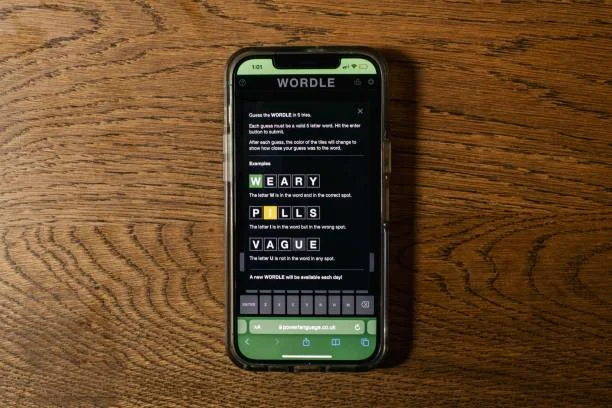
The daily ritual continues! Another day brings another five-letter puzzle that millions of players worldwide eagerly anticipate. Whether you’re seeking today’s Wordle answer, looking for strategic hints, or simply want to improve your word-solving skills, this comprehensive guide has everything you need for Wordle puzzle #1565.
Wordle has transformed from a simple web-based game into a global phenomenon that brings people together through shared linguistic challenges. Created by Josh Wardle and later acquired by The New York Times, this deceptively simple word game continues to captivate players with its perfect balance of challenge and accessibility. Each day presents a new opportunity to test your vocabulary, logical thinking, and pattern recognition skills.
For October 1st, 2025, puzzle #1565 offers an intriguing challenge that showcases the game’s ability to surprise even seasoned players. Whether you’re starting your morning routine with coffee and Wordle or sneaking in a quick game during your lunch break, understanding the nuances of today’s puzzle can make the difference between a satisfying solve and a frustrating struggle.
Yesterday’s Wordle Recap: GEESE Analysis
Before diving into today’s challenge, let’s examine yesterday’s answer: GEESE. This word presented interesting strategic considerations for players. The double ‘E’ letters created both opportunities and pitfalls, demonstrating how repeated letters can significantly impact solving strategies.
Many players likely started with common opening words like ADIEU, SLATE, or CRANE, which would have revealed the ‘E’ in different positions. The placement of vowels in GEESE (positions 2 and 4) required careful consideration, as players needed to account for the possibility of duplicate letters.
The word GEESE also highlighted the importance of thinking beyond singular forms. While many players might consider GOOSE as a potential answer, the plural form added an extra layer of complexity that separated novice players from more experienced ones.
Today’s Wordle Puzzle #1565: Step-by-Step Solution Guide
Today’s Wordle answer is: SPOIL
Let’s break down the solving process for today’s puzzle:
Initial Strategy Assessment
SPOIL presents a moderately challenging puzzle with several favorable characteristics. The word contains two vowels (O and I) and begins with the common consonant cluster ‘SP’. This combination makes it accessible to players using vowel-heavy opening strategies while still providing enough consonant variety to challenge those who prefer consonant-focused approaches.
Recommended Starting Words
For today’s puzzle, several opening words would have provided excellent information:
- ADIEU would reveal the I and O vowels immediately
- AROSE would identify the O and potentially the S
- STARE would confirm the S and potentially other letters
- PIANO would reveal both vowels and the N (absence)
Progressive Solving Steps
Step 1: Vowel Discovery
Using a vowel-rich opener like ADIEU or AUDIO helps identify the two vowels in SPOIL. The placement of O in position 3 and I in position 4 creates a recognizable pattern for experienced players.
Step 2: Consonant Mapping
The second guess should focus on common consonants, particularly those that frequently appear with the identified vowel pattern. Words like MOIST, POINT, or COINS could help narrow down possibilities.
Step 3: Pattern Recognition
With SP_OI_ identified, the final letter becomes the primary challenge. The L ending is relatively common in English words, making SPOIL a logical conclusion for most players.
Essential Wordle Strategies for Consistent Success
Opening Word Selection
Your first guess sets the foundation for the entire puzzle. The most effective strategies include:
Vowel-Heavy Approach: Words like ADIEU, AUDIO, or OUIJA maximize vowel discovery but may leave consonant patterns unclear.
Balanced Strategy: Terms like SLATE, CRANE, or TRACE provide a mix of common vowels and consonants, offering versatile information for most puzzles.
Consonant Clusters: Starting with words like SPORT, PLANT, or CLAMP can quickly identify common letter combinations.
Second Guess Optimization
Your second word should complement your opener by filling information gaps. If your first guess revealed vowels, focus on common consonants. If consonants dominated your initial attempt, prioritize remaining vowels.
Pattern Recognition Skills
Developing strong pattern recognition significantly improves solving efficiency. Common English word patterns include:
- Words ending in -ING, -ION, -TION
- Double letters (LL, SS, EE, OO)
- Common prefixes (UN-, RE-, IN-)
- Frequent suffixes (-ED, -ER, -LY)
Letter Frequency Awareness
Understanding letter frequency in English helps prioritize guesses. The most common letters (E, T, A, O, I, N, S, H, R) should feature prominently in early guesses, while less common letters (Q, X, Z, J) require special consideration when they appear.
Advanced Tips and Tricks for Wordle Mastery
Managing Duplicate Letters
Words with repeated letters present unique challenges. When you identify a duplicate letter, consider its possible positions carefully. Common patterns include double letters at the end (STILL, CHESS) or separated duplicates (ARENA, LEVEL).
Elimination Strategy
Sometimes the most valuable information comes from what letters aren’t in the word. Use elimination guesses strategically to rule out common letters and narrow possibilities more efficiently than trying to force correct letters.
Position-Specific Thinking
Different positions in five-letter words follow distinct patterns:
- Position 1: Common starting letters include S, C, B, T, P, A, F
- Position 2: Vowels frequently appear here, especially A, E, O
- Position 3: Central positions often contain vowels or common consonants
- Position 4: Less predictable, requiring strategic deduction
- Position 5: Common endings include S, E, Y, D, R, T
Time Management
While Wordle doesn’t impose time limits, developing efficient solving habits improves consistency. Avoid rushing early guesses, but don’t overthink obvious patterns in later attempts.
The Cultural Impact of Wordle and Word Games
Social Media Phenomenon
Wordle’s distinctive colored grid sharing system created a unique form of social media communication. The spoiler-free format allows players to share their journey without revealing answers, fostering community engagement while preserving the puzzle’s integrity for others.
Educational Benefits
Word games like Wordle provide numerous cognitive benefits:
- Vocabulary Expansion: Regular play introduces players to new words and reinforces existing knowledge
- Pattern Recognition: Identifying letter combinations improves reading and spelling skills
- Logical Reasoning: Strategic thinking translates to problem-solving abilities in other areas
- Memory Enhancement: Remembering previous guesses and letter positions exercises working memory
Global Accessibility
Wordle’s simple format transcends language barriers, inspiring versions in dozens of languages. This universality demonstrates the power of well-designed puzzles to bring people together across cultural boundaries.
Workplace and Family Bonding
Many offices and families have adopted Wordle as a shared daily activity, creating conversation starters and friendly competition. The game’s brief time commitment makes it perfect for quick breaks and social interaction.
Wordle Variations and Similar Games
Official NYT Variants
The New York Times has expanded their puzzle offerings with games like Connections, Mini Crossword, and Strands, creating a comprehensive daily puzzle experience for word game enthusiasts.
Community-Created Versions
The Wordle format has inspired countless variations:
- Dordle/Quordle: Multiple simultaneous puzzles
- Absurdle: An adversarial version that changes the target word
- Worldle: Geography-based guessing
- Nerdle: Mathematical equation puzzles
Unlimited Versions
For players wanting more than one daily puzzle, unlimited versions allow continuous play with randomly generated or archived puzzles.
Frequently Asked Questions
Wordle is a daily word puzzle where players have six attempts to guess a five-letter word. After each guess, letters turn green if correct and in the right position, yellow if correct but in the wrong position, or gray if not in the word at all.
Wordle resets daily at midnight in your local time zone. Each day brings one new puzzle for all players worldwide.
The official NYT version only offers the current day’s puzzle, but various unofficial sites archive previous puzzles for practice.
Nothing negative occurs if you don’t solve a puzzle. Your statistics will show the miss, but you can try again with tomorrow’s puzzle.
While solver tools exist, using them defeats the purpose of the challenge. The satisfaction comes from solving puzzles through logical deduction and vocabulary knowledge.
Consistent improvement comes from developing better starting word strategies, learning common letter patterns, and practicing regularly. Focus on maximizing information from early guesses rather than trying to solve in fewer attempts.
No single “best” starting word exists, but effective options include ADIEU, SLATE, CRANE, and TRACE. The key is consistency with your chosen strategy.
Take a break and return with fresh perspective. Review which letters you’ve eliminated and consider less common word patterns. Sometimes stepping away helps your subconscious process the available information.
Master Your Daily Word Challenge
Wordle continues to provide daily mental stimulation and social connection for millions of players worldwide. Today’s answer, SPOIL, demonstrates the game’s ability to balance accessibility with challenge, offering satisfaction for solvers at every skill level.
Remember that improvement comes through consistent practice and strategic thinking. Whether you solved today’s puzzle in two guesses or needed all six attempts, each game provides valuable learning opportunities. The key lies not in perfect performance but in enjoying the daily challenge and celebrating the moments when everything clicks into place.
Share your Wordle journey with friends and family, discuss strategies, and embrace the community aspect that makes this simple word game so enduringly popular. Tomorrow brings puzzle #1566 and another opportunity to test your word-solving skills. Keep those thinking caps ready, and may your guesses be ever in your favor!
previous wordleanswer answer
- Wordle Answer Today #1562 | Wordle Hint | today’s wordle 28Sep 2025
- Wordle Answer Today #1561 | Wordle Hint | today’s wordle 27Sep 2025
- Wordle Answer Today #1560 | Wordle Hint | today’s wordle 26Sep 2025
- Wordle Answer Today #1558 | Wordle Hint | today’s wordle 24Sep 2025
- Wordle Answer Today #1557 | Wordle Hint | today’s wordle 23Sep 2025
